Your PT Is Wrong. Calories Don't Fix a Broken Gut. Nutrients Do.
A proper randomised controlled trial has just quietly demolished the "just hit your macros" advice most people are still being sold in the gym. And if your focus falls off a cliff at 2pm, this one is for you.
Right. Eh up team. Let me set the scene, because this comes up almost every week.
A sharp, capable person walks in. They train four times a week. Their PT has them hitting 180g of protein, tracking every rice cake, weighing broccoli like it's cocaine. On paper, the diet is textbook. In real life, they're bloated, foggy by mid-afternoon, sleeping badly, and quietly wondering why the more "disciplined" they get, the worse they feel.
Then they say the line I've heard a thousand times: "But my PT said calories are all that matter."
No mate. They aren't. And now we've got proper randomised evidence to prove it.
The Study Your PT Hasn't Read
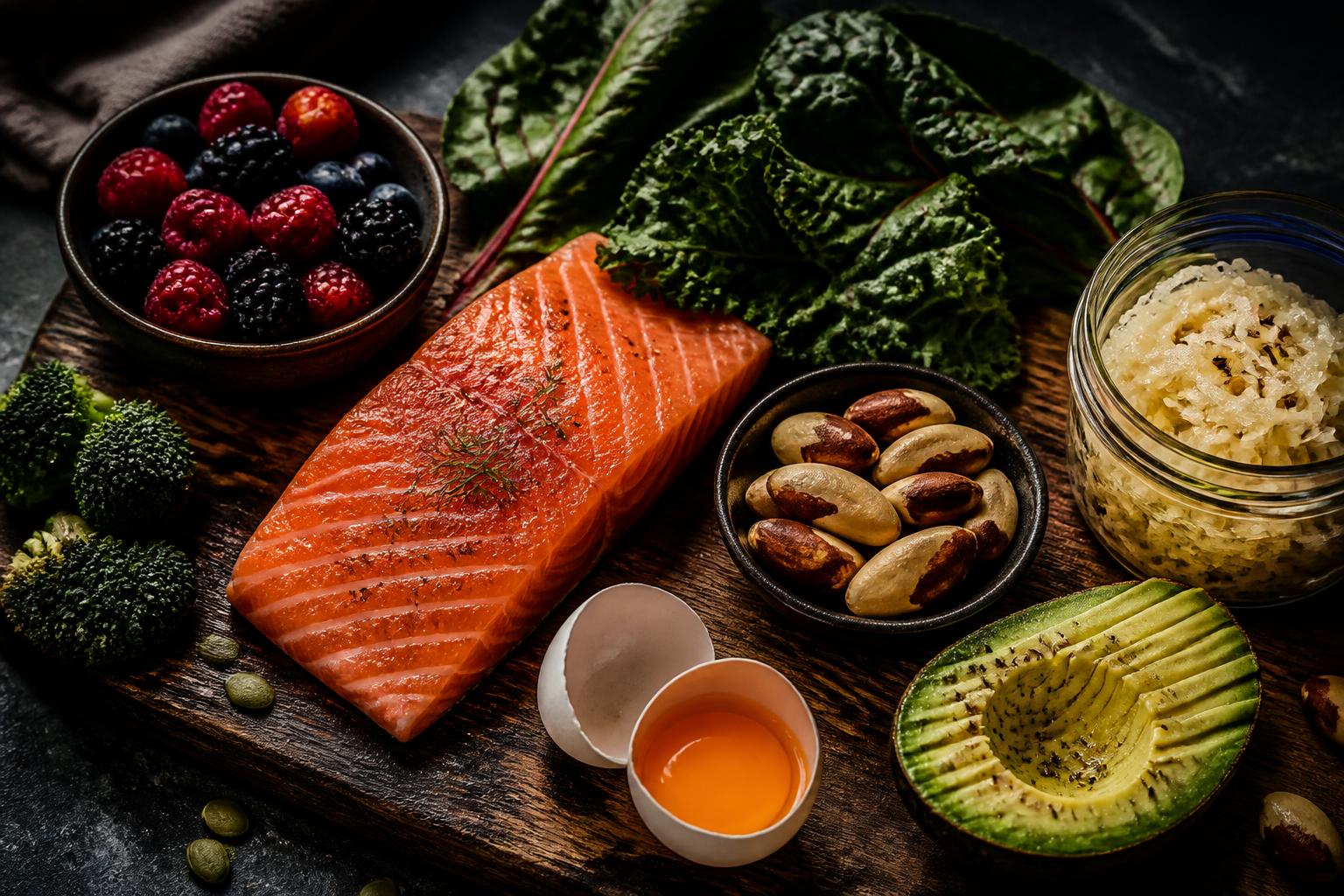
A randomised controlled trial, the actual gold standard, not a wellness podcast, took people eating a standard modern diet and upregulated their nutrient density. Same calories. Same macros. Just better food. More omega-3s, more polyphenols, more B vitamins, more magnesium, more fibre feeding the gut. Real food, in the ratios humans actually evolved to eat.
The result wasn't subtle. Cognitive performance went up. Attention span improved. Working memory sharpened. Mood scores lifted. Inflammatory markers dropped. And this wasn't over years. It was weeks.
Same calories in. Different biology out.
The bit worth writing on the wall
A calorie is a unit of energy. Your brain doesn't run on units of energy. It runs on neurotransmitters, mitochondrial cofactors, membrane fats and hormone precursors. All of which come from nutrients. Not from calories.
The Calorie Trap
Here's the analogy. Two cars. Same fuel gauge. One's running on premium unleaded, filters clean, oil fresh. The other's got dirty diesel, a clogged filter, and hasn't had a service in three years.
Both have "the same fuel in." One drives like a dream. The other coughs, misfires and dies at the traffic lights. Calories are the fuel gauge. Nutrients are what the engine is actually made of.
Your PT is looking at the gauge. That's it. That's the whole strategy.
And Now The Bit About Your Gut
This is where it gets uncomfortable, because even the nutrient argument is only half the story.
You can eat the cleanest, most colourful, most magazine-worthy plate in London. If your gut is inflamed, dysbiotic, or moving food through at the wrong speed, you're not absorbing a fraction of what you're paying for. The nutrients go in the top and straight out the bottom. Expensive urine. Expensive stools. No cellular delivery.
This is the piece nobody in the gym world wants to talk about, because it's not sexy and you can't put it on a spreadsheet. But it's the whole game.
What a bloated, under-recovered gut actually does to your workday
- Blunts absorption of the B vitamins that make dopamine and adrenaline. Hello, 2pm crash.
- Wrecks conversion of tryptophan into serotonin. Hello, flat mood and 11pm doom-scroll.
- Leaves the gut lining leaky. Inflammatory molecules head north. Hello, brain fog.
- Trashes vagal tone. You can't drop into rest-and-digest, so you never properly recover.
- Starves the microbes that make short-chain fatty acids, the fuel your gut wall runs on.
None of that shows up on your PT's MyFitnessPal. All of it shows up in your afternoon.
The Upregulation, In Real Food
You don't need a stack of supplements. You need three or four honest upgrades on repeat.
- Wild-caught oily fish twice a week. Omega-3s for brain membranes and inflammation.
- Thirty different plants a week. Not thirty portions. Thirty different species. This is the single biggest driver of microbiome diversity in the literature.
- Fermented food daily. A spoonful of sauerkraut, kefir, live yoghurt. Cheap, ancient, effective.
- Pasture-raised eggs. Choline for focus, cholesterol for hormones, real yolk not the sad supermarket beige version.
- Organ meats or shellfish once a week. The most nutrient-dense food humans have ever eaten. Nothing on the shelf touches it.
Same calories as your current diet. Radically different signal to your biology.
The Habits That Let The Food Actually Land
- Chew properly. Digestion starts in the mouth. Inhaling lunch at your desk in ninety seconds is a guarantee your gut won't cope.
- Ten minutes of daylight before your first coffee. Sets the circadian clock that runs your digestion.
- Stop eating three hours before bed. Give the gut a genuine rest so it can repair.
- Breathe through your nose. Sounds mad. Isn't. It's the fastest way to switch your nervous system into rest-and-digest so food actually absorbs.
The compound effect
Better nutrients feed a healthier gut. A healthier gut absorbs more nutrients. More nutrients means sharper focus, better mood, deeper sleep. Better sleep repairs the gut. Round and round it goes. This is the loop your PT's spreadsheet doesn't see.
Fix The Engine, Not The Fuel Gauge
If you're hitting your macros to the gram and still crashing at 2pm, still bloated by Wednesday, still flat by Friday, the answer isn't more protein and less carbs. It's better food, in a gut that can actually use it.
Calories tell you how much. Nutrients tell your body what to build. Your gut decides whether any of it actually lands. Miss any of those three and your afternoon focus, your recovery, and eventually your career all pay the bill.
Take the tape off the dashboard. Open the bonnet. The engine is where the work is.